
Have you ever wondered whether you should write “humour” or “humor”? You may see both spellings in books, newspapers, websites, and everyday conversations. This can be confusing, especially for students and people learning English.
The good news is that humour and humor have the same meaning. They refer to the quality of being funny, the ability to make people laugh, or something that is amusing.
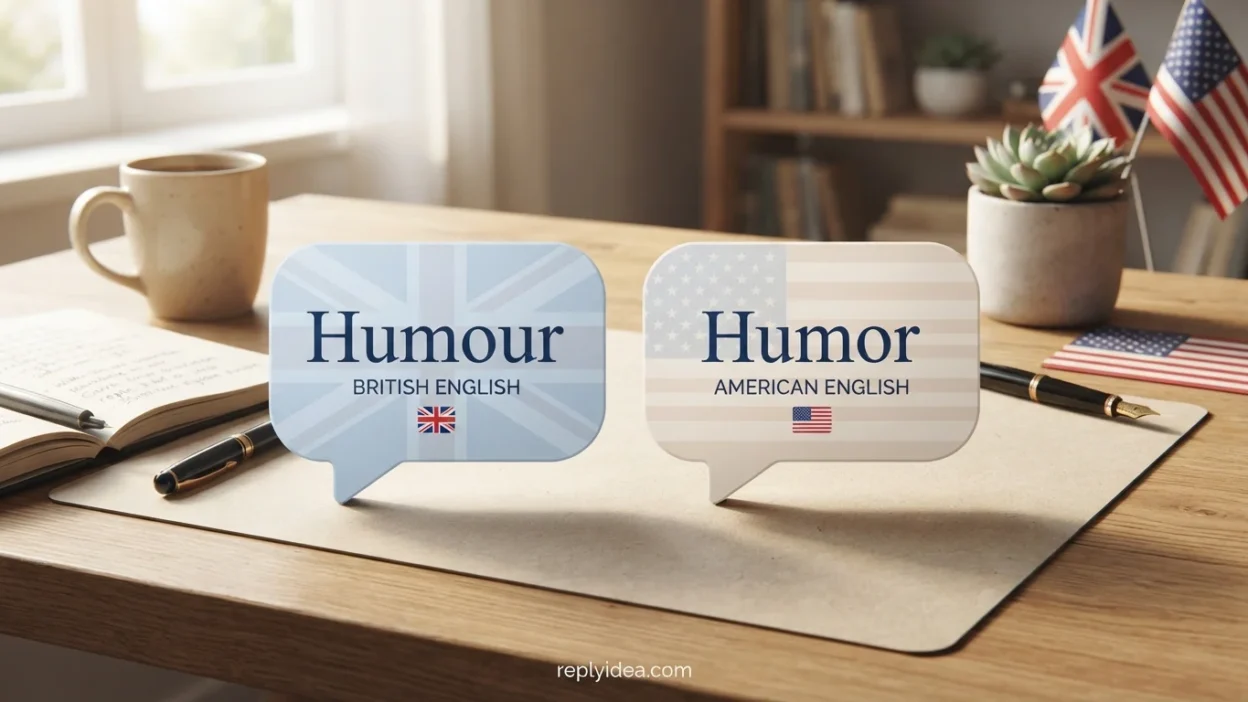
The main difference is where the spelling is used. “Humour” is the standard spelling in British English, while “humor” is the standard spelling in American English.
Neither spelling is wrong. The best choice depends on the type of English you are using.
Quick Answer: Humour or Humor?
- Humour is the British English spelling.
- Humor is the American English spelling.
- Both words have the same meaning.
- Use humour when following British English spelling.
- Use humor when following American English spelling.
- Canadian, Australian, and some other varieties of English commonly use humour.
- American schools, books, newspapers, and businesses generally use humor.
- The pronunciation is essentially the same.
Easy rule to remember
British English → humour
American English → humor
For example:
- British: She has a great sense of humour.
- American: She has a great sense of humor.
Both sentences mean exactly the same thing.
Where Do “Humour” and “Humor” Come From?
The word has a long history. It came into English through French and Latin.
The Latin word humor originally referred to a liquid or fluid in the body. In old medical beliefs, people thought that different body fluids affected a person’s health, mood, and personality.
Over time, the meaning changed. The word became connected with a person’s mood and later with the ability to make people laugh.
The spelling also developed differently in British and American English.
British English kept the -our ending in words such as:
- humour
- colour
- favour
- honour
- behaviour
American English often changed these endings to -or:
- humor
- color
- favor
- honor
- behavior
This is why humour and humor are not two different words. They are two spellings of the same word.
What Is the Difference Between Humour and Humor?
The simplest answer is that there is no difference in meaning.
The difference is mainly regional spelling.
Humour
Humour is commonly used in British English and other forms of English that follow British spelling.
Example:
His sense of humour makes everyone laugh.
You may see this spelling in British newspapers, schools, books, and everyday writing.
Humor
Humor is the standard American English spelling.
Example:
His sense of humor makes everyone laugh.
You will commonly see this form in American books, newspapers, schools, and online writing.
The meaning stays the same
Both words can describe:
- something funny
- a person’s ability to make people laugh
- a funny quality in a situation
- a style of comedy
- a person’s sense of what is amusing
So, if you write humour instead of humor, you have not changed the meaning. You have simply chosen a different spelling style.
Humour vs. Humor: Comparison Table
| Point | Humour | Humor |
|---|---|---|
| Main English variety | British English | American English |
| Meaning | Being funny or amusing | Being funny or amusing |
| Spelling | -our | -or |
| Pronunciation | Essentially the same | Essentially the same |
| Common in the UK | Yes | No, usually |
| Common in the US | No, usually | Yes |
| Example | I enjoy British humour. | I enjoy American humor. |
| Correct spelling? | Yes | Yes |
The important thing is to choose one spelling style and use it consistently.
Which One Should You Use?
Your choice depends on your audience and the English style you are following.
Use “humour” when:
- You are writing in British English.
- Your school follows British spelling.
- You are writing for readers in the UK.
- You are using Australian or similar British-based spelling.
- The rest of your writing uses words such as colour, favour, and honour.
Example:
The comedian is famous for his dry humour.
Use “humor” when:
- You are writing in American English.
- Your school follows American spelling.
- You are writing for readers in the United States.
- The rest of your writing uses words such as color, favor, and honor.
Example:
The comedian is famous for his dry humor.
What if you are not sure?
Look at the spelling style used in the rest of your document.
If you are already using:
- colour
- favourite
- centre
- honour
then humour is probably the better choice.
If you are using:
- color
- favorite
- center
- honor
then humor is probably the better choice.
Common Mistakes People Make
Because the two spellings look different, learners sometimes think they have different meanings. Usually, this is not true.
Mistake 1: Thinking they mean different things
Some people believe humour means British comedy and humor means American comedy.
That is incorrect.
Both spellings can describe comedy, fun, amusement, or a person’s ability to make others laugh.
Mistake 2: Mixing spelling styles
A common mistake is using British and American spellings randomly in the same piece of writing.
For example:
The color of the room is beautiful, and the comedian has a great sense of humour.
This is not necessarily impossible or unclear, but if you are following one spelling system, consistency is better.
Choose either:
The colour of the room is beautiful, and the comedian has a great sense of humour.
or:
The color of the room is beautiful, and the comedian has a great sense of humor.
Mistake 3: Thinking “humor” is incorrect
Humor is not an incorrect spelling. It is the normal American English spelling.
Mistake 4: Thinking “humour” is outdated
Humour is not an old or incorrect spelling. It is still standard in British English and other varieties that use British spelling.
Mistake 5: Changing the spelling without checking the audience
If you are writing for an American audience, humor may look more natural. If your audience uses British English, humour is usually the better choice.
Everyday Examples of Humour and Humor
Seeing the words in real situations can make the difference easier to remember.
1. In an Email
British English
Thank you for your message. I enjoyed your sense of humour.
American English
Thank you for your message. I enjoyed your sense of humor.
Both emails are correct. The spelling depends on the English variety being used.
2. In News Writing
A British newspaper might write:
The actor is well known for his sense of humour.
An American newspaper might write:
The actor is well known for his sense of humor.
Again, the meaning does not change.
3. On Social Media
A British English user might post:
I love her sense of humour!
An American English user might write:
I love her sense of humor!
Both are natural.
4. In Daily Conversation
You might hear someone say:
He has a good sense of humour.
Or:
He has a good sense of humor.
The spoken word sounds essentially the same. The difference is visible mainly when the word is written.
5. In School Writing
If your teacher asks you to use British English, write:
A good sense of humour can make difficult situations easier.
If your teacher asks you to use American English, write:
A good sense of humor can make difficult situations easier.
Always follow the spelling rules your teacher or school requires.
A Simple Learning Trick for Students
If you often forget which spelling belongs to which variety of English, use this easy trick:
“OUR” = British English
Remember that British English often keeps OUR:
- humour
- colour
- favour
- honour
“OR” = American English
American English often uses OR:
- humor
- color
- favor
- honor
This pattern can help you remember the spelling of many similar words.
Practice these pairs
| British English | American English |
|---|---|
| humour | humor |
| colour | color |
| favour | favor |
| honour | honor |
| behaviour | behavior |
| neighbour | neighbor |
The spelling pattern is easier to understand when you see several examples together.
Related Forms of the Word
The difference also appears in related words.
British English
- humour
- humorous
- humourless
American English
- humor
- humorous
- humorless
For example:
British:
She gave a humorous speech.
American:
She gave a humorous speech.
Notice that humorous does not simply change in exactly the same way as the basic word. It is important to learn common forms as complete words.
FAQs:
1. Is “humour” or “humor” correct?
Both are correct. Humour is the usual British English spelling, while humor is the usual American English spelling.
2. Does humour mean something different from humor?
No. They have the same meaning. The main difference is spelling.
3. Which spelling is used in the UK?
Humour is the standard spelling in British English.
4. Which spelling is used in the United States?
Humor is the standard spelling in American English.
5. Is “humor” an American word?
It is the American spelling of the word. The word itself is not limited to the United States.
6. Should students use humour or humor?
Students should use the spelling required by their school, teacher, or chosen English variety. If you are using British English, choose humour. If you are using American English, choose humor.
7. Are humour and humor pronounced differently?
They are generally pronounced the same way. The difference is mainly in written spelling.
8. How can I remember the difference?
Remember:
British = humour
American = humor
You can also connect -our with other British spellings such as colour and favour.
Final Conclusion
The choice between humour and humor is much easier once you understand that they are the same word with different regional spellings.
Humour is the standard British English spelling, while humor is the standard American English spelling. Both refer to something funny, amusing, or a person’s ability to make people laugh.
The most important rule is to follow the English style you are using and stay consistent. If you are writing British English, choose humour. If you are writing American English, choose humor.
So, the next time you see both spellings, do not worry. Neither one is wrong. Your choice simply depends on the variety of English you are using.